Writing: A Handwritten Font for Joyful, Romantic Design
The Personality Behind the Curves
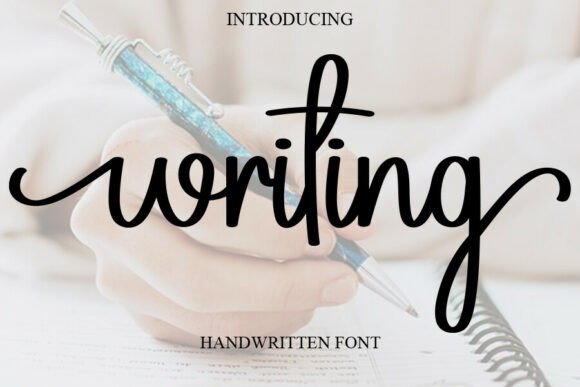
At its core, Writing is a typeface that captures the warmth of human connection. It’s a delicate, cursive handwritten font, but that simple description doesn’t quite do it justice. Imagine the gentle flow of a personal note, the elegant loops of a signature on a love letter, or the casual charm of a message scrawled on a chalkboard menu. That’s the space Writing inhabits. Its letterforms are crafted with a soft, flowing rhythm, featuring gentle slants, rounded terminals, and a consistent, pleasant baseline that makes it feel both personal and polished. Unlike some overly formal script fonts that can feel stiff, or messy grunge fonts that sacrifice legibility, Writing strikes a beautiful balance. It’s stylish without being pretentious, and casual without being sloppy. This gives it a unique personality—a blend of joyful energy and romantic elegance that feels approachable and authentic.
This font isn’t about making a loud, technical statement. It’s about evoking a feeling. Its visual style leans into modern typography principles where emotion and context are key. The slight irregularities you might find in its strokes are intentional, mimicking the organic feel of real handwriting. This human touch is what makes it so effective for projects that need to connect on a personal level. It’s a creative font designed to add a layer of warmth and sincerity, making it a versatile design asset for anyone looking to soften their message or infuse it with personality.
Where Writing Truly Shines: Practical Applications
Understanding a font’s personality is one thing; knowing where to deploy it is where the real strategy comes in. Writing excels in contexts where you want to break down formality and create an immediate, friendly rapport with your audience. Think of it as the typographic equivalent of a warm smile and a handshake.
- Branding & Logo Design: For small businesses, boutiques, artisan makers, wellness brands, or wedding planners, Writing can be a cornerstone of a brand identity. It works beautifully for a main logotype or as a complementary script for a tagline. It tells customers, “We’re approachable, we care about craft, and we value personal connection.” It’s a premium font choice that feels bespoke without the custom lettering price tag.
- Marketing & Social Media: In the fast-scroll world of social media, a touch of handwritten elegance can stop the thumb. Use Writing for Instagram story highlights, quote graphics, sale announcements, or call-to-action overlays on images. Its clarity at smaller sizes makes it surprisingly functional for social media graphics, while its style ensures your posts feel curated and intentional.
- Editorial & Packaging Design: Imagine a cookbook with chapter titles in Writing, or a lifestyle blog using it for pull quotes. In packaging design, it can grace the label of a artisanal jam, a scented candle, or a gift box, instantly communicating handmade quality and care. It adds a layer of sophistication to editorial design that feels both modern and timeless.
- Personal & Celebratory Projects: This is where Writing feels most at home. It’s the quintessential choice for wedding invitations, save-the-dates, and thank you cards. It’s also perfect for personal blogs, digital planners, greeting cards, and any project where a heartfelt, personal touch is the goal.
The key is context. You wouldn’t use Writing for a dense legal document or a technical manual. But for anything that benefits from a human, emotional, or celebratory tone, it’s a powerful tool. It’s a display font meant for headlines, logos, and short bursts of impactful text, not for body copy.
Making It Work: Pairing, Readability, and Professional Use
Integrating a distinctive font like Writing into a project requires a thoughtful approach to ensure it enhances rather than overwhelms. Here’s how to use it effectively.
The Art of Font Pairing
The most common mistake with a strong script or handwritten font is pairing it with another ornate typeface. The goal is contrast and balance. Writing pairs exceptionally well with clean, simple sans serif fonts. Think of a font like Montserrat, Open Sans, or Lato for your body text or supporting information. The simplicity of the sans serif provides a calm, readable foundation that lets the elegance of Writing stand out without competition. For a more traditional or editorial feel, you could pair it with a classic, highly readable serif font like Georgia or Lora. The key is to let Writing be the star of the show for key elements, while its partner font handles the heavy lifting of longer text passages.
Readability and Hierarchy
As a script font, Writing’s readability is optimal at larger sizes. Use it for:
- Logo lockups and brand names
- Website headers and H1 or H2 headings
- Pull quotes and call-out boxes
- Single lines of text on social media graphics
- Short, impactful phrases on packaging
Avoid using it for paragraphs, lengthy product descriptions, or small body text where legibility is paramount. Its strength is in creating visual hierarchy—guiding the viewer’s eye to the most important, emotionally resonant information first. By setting a headline in Writing and the supporting text in a neutral sans serif, you create an immediate and clear structure.
Evaluating Fit and Licensing
Before committing, always test the font with your actual project content. Type out your key phrases, logo name, or headline. Does the letter spacing feel right? Do the specific letter combinations (like “th” or “ll”) flow naturally? Check what’s included in the font package. A good commercial font like Writing will often include stylistic alternates, ligatures, or different weights that give you more creative flexibility.
Finally, understand the licensing. If you’re using it for a client project, a business logo, or merchandise for sale, you need to ensure the license covers commercial use. Most reputable foundries offer clear licensing tiers for desktop, web, and app use. Treating fonts as proper design assets with clear licensing is a hallmark of professional practice.
In the end, Writing is more than just a collection of letters; it’s a mood. Used thoughtfully, it can transform a generic project into something that feels personal, joyful, and genuinely connected to its audience. It’s a tool for adding that elusive human touch in a digital world.