Tattoo Letter: Vintage Ink for Modern Brands
In a digital world saturated with clean lines and minimalist aesthetics, there's a powerful counter-movement brewing. It’s a return to grit, to authenticity, to the kind of visual storytelling that feels earned, not just designed. This is the space where a typeface stops being just a tool and becomes a character. Tattoo Letter is that character. It’s not merely a serif font; it’s a direct line to the rebellious soul of traditional American tattoo art, translated into a versatile premium font for the modern creative.
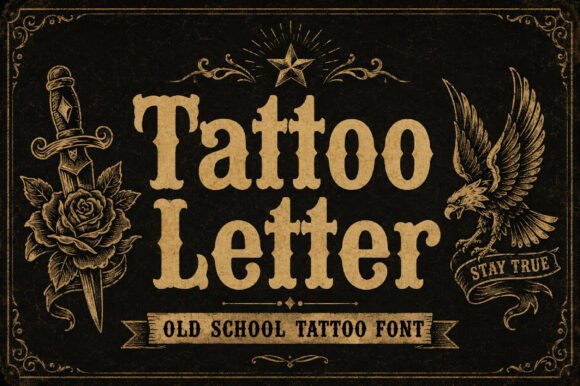
At its core, Tattoo Letter is a display font that wears its history on its sleeve—or rather, in its letterforms. Imagine the bold, ornamental scripts from vintage flash sheets, the kind you'd see in a classic parlor from the 1940s. That’s its DNA. You’ll notice heavy, confident strokes, classic western serifs that give it a sturdy foundation, and those signature rhythmic dots that add a layer of hand-crafted texture. The overall effect is a weathered, tactile quality that mimics the look of ink pressed into skin or printed on aged paper. It’s a creative font built for maximum impact, not for body text. Its robust visual weight and decorative flair are designed to command attention in headlines, logos, and hero sections.
Where Does This Typeface Belong?
Think of Tattoo Letter as your secret weapon for projects that need to communicate heritage, craftsmanship, and an unapologetic attitude. It thrives in environments where authenticity is the currency.
For brand identity, it’s a powerhouse. A craft brewery looking to evoke the spirit of a local, no-nonsense taproom will find its perfect match. A custom motorcycle shop or a streetwear brand aiming for that "stay true" grit can build an entire visual system around its distinctive personality. It’s equally at home in packaging design, adding instant shelf appeal to artisanal hot sauces, small-batch coffee, or vinyl record sleeves. The font doesn’t just label a product; it tells a story before the customer even takes a sip or a listen.
In the realm of editorial design and web design, its role is more specific but just as powerful. Use it for high-impact headers in a magazine about custom culture, a blog focused on traditional craftsmanship, or the hero banner of a website for a vintage-inspired brand. It sets a tone immediately. For social media graphics, it can cut through the noise, making a bold statement on Instagram posts or YouTube thumbnails that needs to stop a scrolling thumb in its tracks.
Practical Application: Making It Work for You
Adopting a typeface with this much personality requires a thoughtful approach. It’s not a set-it-and-forget-it solution. Here’s how to integrate Tattoo Letter effectively into your projects.
Evaluate the Project Fit
First, ask if the font’s personality aligns with your project’s core message. Tattoo Letter excels at conveying themes of rebellion, tradition, craftsmanship, and rugged individualism. If you’re designing for a luxury spa or a cutting-edge tech startup, it might create a dissonant tone. But for a barbershop, a tattoo studio, a rock festival, or a brand selling heritage goods, it’s a perfect fit. Always consider your audience; this font resonates with adults who appreciate vintage aesthetics and subculture authenticity.
Master the Art of Font Pairing
This is where strategy comes in. A display font like Tattoo Letter needs a supporting cast. Pairing it with a clean, neutral sans serif font for body text is a classic and effective approach. The contrast allows the headline font to shine while ensuring readability for longer passages. Think of it as the lead singer and the rhythm section. You could also explore pairing it with a simple script font for a touch of elegance in specific contexts, but avoid pairing it with another highly decorative handwritten font, as they’ll compete for attention and create visual clutter.
Readability and Hierarchy
Because of its intricate details and heavy weight, Tattoo Letter is best used at larger sizes. It’s a hero, not a footnote. Use it for H1 headings, logos, or short, punchy taglines. Never attempt to use it for paragraphs or fine print. In a layout, establish a clear visual hierarchy: let Tattoo Letter announce the main idea, and let a more legible serif font or sans serif font handle the supporting information. This ensures your design is both striking and functional.
Review the Full Package
A quality premium font like Tattoo Letter often comes with more than just uppercase letters. Check for stylistic alternates, ligatures, and possibly even a set of decorative ornaments or icons. These extra design assets can be invaluable for creating unique lockups, custom monograms, or adding authentic details to your work. Understanding what’s included in the license is also crucial for commercial projects, ensuring you can use it across all your intended applications without issue.
Ultimately, Tattoo Letter is more than just a commercial font