Ashley: The Premium Calligraphy Font for Timeless Luxury
More Than a Font: A Visual Identity
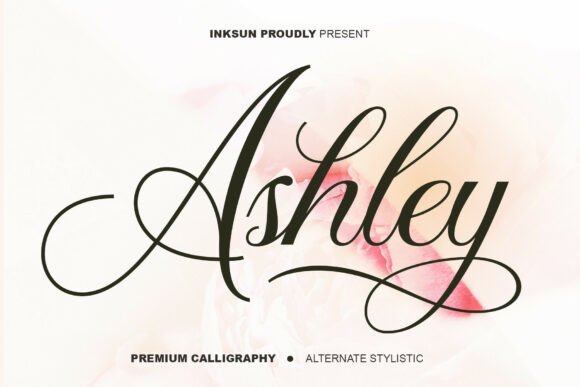
When you first encounter Ashley, it doesn't just sit on the page; it performs. This is the kind of typeface that carries weight without being heavy, and confidence without shouting. As a premium calligraphy font, Ashley is meticulously crafted with a delicate yet assured weight that bridges the gap between traditional script and modern luxury. It isn’t merely a collection of letters; it is a design asset built to establish tone immediately. The fluidity of its strokes suggests a human hand, yet the consistency in its baseline and x-height ensures that it functions seamlessly in professional brand identity systems.
For designers and business owners, the challenge is often finding a typeface that feels personal but scales well. Ashley solves this by balancing modern typography principles with an artisanal aesthetic. The visual personality here is one of refined sophistication. It avoids the chaotic loops of casual handwritten font styles, opting instead for controlled elegance. Whether you are laying out a magazine spread or mocking up a product label, Ashley brings a specific flavor to the project—one that whispers quality rather than screaming for attention. It is a creative font that understands its role: to elevate the content it surrounds.
Strategic Applications: Where Ashley Truly Shines
Understanding where to deploy a script font like Ashley is just as important as the font itself. Because of its intricate detailing, it is not designed for body text in long-form reading. Instead, its strength lies in high-impact, short-form applications where visual hierarchy is paramount. In brand identity, Ashley is the perfect choice for a primary logo or a secondary brand mark. Imagine a boutique skincare line or a high-fashion logo; the font’s curves mimic the fluidity of lotions or the drape of silk, instantly signaling the product's quality to the consumer.
In the realm of packaging design, readability is key, but so is shelf appeal. Ashley excels here because it offers a distinct silhouette that stands out against competitors using standard sans serif font or serif font options. It works beautifully for product names, taglines, or "Best Seller" badges. For editorial design, consider using Ashley for mastheads, pull quotes, or chapter titles. It draws the eye and breaks up the monotony of standard body copy, creating a rhythm that keeps readers engaged. Even in digital spaces—like a hero image on a website or a stylized header for an email newsletter—Ashley adds a layer of brand perception that suggests a curated, premium experience.
Real-World Pairings and Hierarchy
One of the most common questions in typography is regarding font pairing. A display font like Ashley needs a strong partner to handle the heavy lifting of information. Because Ashley has such a strong personality, it pairs best with clean, neutral typefaces. A geometric sans serif font (think Montserrat or Lato) creates a beautiful contrast, allowing the calligraphy to breathe while maintaining a modern edge. Alternatively, pairing it with a classic serif font can create a more traditional, academic look suitable for publishing or luxury real estate.
When testing font pairings, pay attention to the weight distribution. Since Ashley has a delicate weight, avoid pairing it with fonts that are too thin or light, as this can cause the text to disappear. You want the supporting typeface to provide a stable foundation. In web design, this contrast is crucial for accessibility. Use Ashley for H1 or H2 headers where size is generous, and let your secondary font handle the smaller, pixel-sensitive text. This approach ensures your site looks high-end without sacrificing user experience.
Practical Implementation: From Screen to Print
Before you integrate Ashley into your next project, it is worth taking a moment to evaluate the specific requirements of your medium. In print—such as wedding invitations or business cards—ink bleed can be an issue with very thin strokes. Ashley is designed with a weight that holds up well on high-quality cardstock, but you should always run a test print. Check how the letterforms interact with the paper texture. A smooth, coated paper will let the calligraphy font shine, while a rough, uncoated stock might require a slight increase in size to maintain legibility.
For digital applications like social media graphics or web design, rendering is the priority. Ensure that the font files are properly optimized for web use (WOFF2 format is standard). Because script fonts rely on smooth curves, pixelation is more noticeable than on blocky sans serifs. View your designs at 100% zoom on multiple devices—mobile, tablet, and desktop—to ensure the tails of the 'y' and 'g' don't get cut off or touch adjacent elements in tight layouts.
Licensing and Long-Term Value
When investing in a commercial font, the license is as critical as the design. Ashley is a professional tool, and understanding its licensing terms ensures you can use it safely across all your design assets. Whether you are a freelancer creating logos for clients or an entrepreneur building your own brand identity, verify that your license covers the intended usage. Most premium fonts distinguish between desktop licenses (for print and logos) and web licenses (for CSS implementation).
Furthermore, look at the font family details. Does Ashley come with alternate characters or ligatures? High-quality calligraphy fonts often include stylistic alternates that allow you to customize the look of specific letters, preventing the "cookie-cutter" appearance that can make script fonts look cheap. Experiment with these OpenType features in software like Adobe Illustrator or Photoshop. Swapping out a standard 'h' for a more elaborate alternate can change the entire flow of a word, giving you that bespoke, hand-crafted feel that defines true luxury design.
Ultimately, choosing a font like Ashley is a decision to prioritize quality and emotional resonance. It is a tool for creators who understand that details matter. By applying it thoughtfully to your logo design, editorial design, or packaging design, you move beyond simple communication and begin to craft experiences. It provides that timeless, artisanal touch that helps your work—and your business—stand apart in a crowded market.