Honeymoon: A Font That Captures Warmth and Celebration
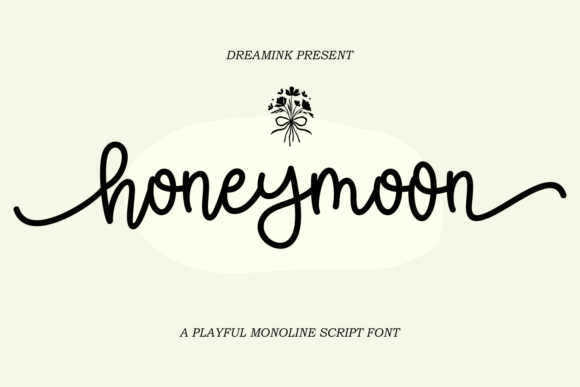
When you're working on a project that needs to feel personal, joyful, and a little bit romantic, the typography you choose does more than just convey words—it sets the entire mood. I've found that the right script font can transform a flat design into something that feels genuinely heartfelt. That's exactly what drew me to Honeymoon. It’s a premium font that doesn't just look like handwriting; it feels like it. The smooth, flowing strokes have a natural rhythm, as if each letter was written with care. This isn't about being overly formal or rigid. Honeymoon strikes a beautiful balance—it’s playful without being childish, and elegant without feeling stiff. It’s the kind of typeface that makes a wedding invitation feel more intimate or a social media quote more relatable.
What really makes Honeymoon work is its consistency. As a monoline script, the line weight stays even throughout, which gives it a clean, modern foundation. The connections between letters are fluid and intuitive, avoiding the awkward joins that can trip up other handwritten fonts. This attention to detail means it remains surprisingly legible, even at smaller sizes. For a designer, that’s a huge win. You get all the warmth and personality of a creative font without sacrificing the clarity your audience needs. Whether it's on a printed card or a digital screen, the text remains readable, which is non-negotiable for effective communication.
Where Honeymoon Truly Shines: From Wedding Invites to Brand Logos
Think about the projects where you want to evoke a specific feeling. Honeymoon excels in contexts where warmth, celebration, and a personal touch are key. It’s a natural fit for wedding invitations, save-the-dates, and thank you cards, where its graceful loops and soft curves can mirror the sentiment of the occasion. But its versatility extends far beyond that. For brand identity work, especially for boutique businesses, lifestyle blogs, or artisan products, Honeymoon can become the cornerstone of a logo. It immediately communicates approachability and craftsmanship. I've seen it used beautifully for bakeries, florists, and independent clothing brands—it adds that handmade quality without looking unprofessional.
In the realm of packaging design, this font can make a product stand out on a shelf. Imagine a gourmet jam label or a scented candle box; Honeymoon adds a layer of artisanal charm that generic sans serif fonts can't match. For editorial design, it works wonderfully for pull quotes, chapter titles, or feature headers in magazines and blogs, injecting personality into the layout. And let's not forget social media graphics. A motivational quote, a sale announcement, or a recipe share using Honeymoon feels more engaging and shareable. It breaks through the visual noise with its friendly, inviting aesthetic.
Pairing Honeymoon with Other Fonts for Professional Results
One of the most common questions I get about script fonts is how to use them effectively without overwhelming a design. The key is contrast and hierarchy. Honeymoon, being a display font with strong personality, should be used sparingly—typically for headlines, logos, or key phrases you want to emphasize. Pair it with a clean, neutral sans serif font for body text. A typeface like Montserrat, Lato, or Open Sans creates a beautiful balance. The sans serif provides the stability and readability for longer paragraphs, while Honeymoon delivers the emotional punch and draws the eye to what matters most.
For a more traditional or editorial feel, you could also pair it with a classic serif font. Think of Honeymoon for a book title or a chapter opener, with a serif like Garamond or Baskerville for the main text. This combination feels timeless and sophisticated. When testing pairings, always check the visual hierarchy. Does the headline (Honeymoon) stand out clearly? Is the body text easy to read at a glance? A good font pairing should feel harmonious, not competing. Honeymoon's balanced style makes it a cooperative teammate in most pairings, adding flair without causing visual clutter.
Practical Considerations: Licensing, Styles, and Real-World Use
Before you dive into using any commercial font, it's crucial to understand what you're getting. Honeymoon typically comes as a single script font style, which is often all you need for its intended applications. However, always review the included character set—does it have the punctuation, numerals, and language support your project requires? For international projects, check for extended Latin characters or diacritics. Most importantly, verify the licensing. A premium font like this will come with a license that outlines permitted uses. If you're creating a logo for a client, designing products for sale, or using it in a paid advertisement, you'll likely need a commercial license. Never assume a free download covers commercial use.
When incorporating Honeymoon into your workflow, test it in context. Mock up your design at the actual size it will be viewed. Check how it looks on different backgrounds—does it maintain its charm on a busy photo or only on solid colors? For web design, consider how it renders on various browsers and devices. While it's perfect for headings and short phrases, avoid setting entire paragraphs in it, as readability will suffer. Use it to guide the viewer's eye, to label, to celebrate. In DIY crafts and personal projects, it’s a fantastic tool for adding a custom, professional touch to handmade items. Ultimately, Honeymoon is a design asset that, when used thoughtfully, can elevate your work from merely informative to truly memorable.