Amibas: Your Go-To Font for Retro Branding
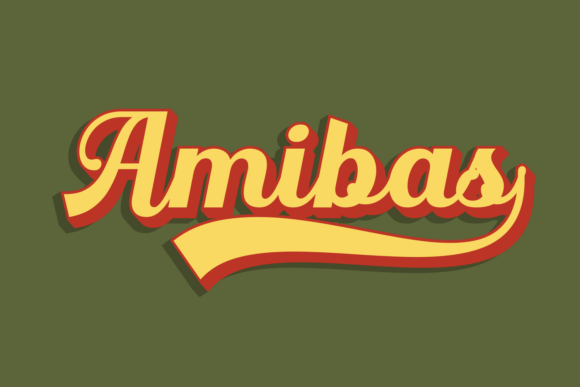
Finding a typeface with genuine personality can feel like searching for a needle in a haystack. You want something that speaks volumes before a single word is read, something that carries a specific mood. That’s where Amibas enters the picture. It isn’t just a collection of letters; it’s a distinct voice, channeling the electric energy of 70s and 80s logo designs. Think of the bold, confident graphics on vintage baseball cards or the swagger of classic athletic branding. Amibas captures that nostalgic, sporty attitude with its thick, dynamic letterforms and a signature bold drop shadow that makes it pop off the page.
At its core, Amibas is a script font designed for impact. Its strong curves and the classic baseball-style tail on certain characters give it a fluid, yet powerful, motion. This isn't a delicate, cursive script; it's a display font meant to command attention in headlines, logos, and signage. The included swashes add an extra layer of flair, allowing you to customize the look for an even more personalized brand identity. For designers working on apparel branding, retro posters, or packaging design, Amibas provides an instant injection of charisma and throwback cool.
Where Amibas Truly Shines
Understanding a font's strengths is key to using it effectively. Amibas excels in projects where energy, nostalgia, and a bold statement are the goals. Its visual weight makes it a powerhouse for logo design, especially for brands in sports, entertainment, food & beverage, or any venture wanting to evoke a sense of fun and tradition. Imagine it on a craft brewery label, a vintage-style t-shirt, or the masthead of a retro-themed blog. The font's inherent character does much of the heavy lifting in establishing the brand's personality.
Beyond logos, consider Amibas for headline graphics in both digital and print applications. It can transform a social media post, making it instantly more engaging in a crowded feed. For editorial design, it works beautifully for chapter titles or pull quotes in magazines and books that aim for a vintage or lifestyle aesthetic. In packaging design, it can make a product stand out on the shelf, promising a fun, authentic experience. Its versatility across creative projects is notable, but it’s important to remember its nature: it’s a premium font built for display, not for setting long paragraphs of body text.
Pairing and Practical Application
Using a font with as much personality as Amibas requires a thoughtful approach to maintain visual hierarchy and readability. The golden rule is balance. Because Amibas is a bold, decorative script font, it pairs best with clean, simple companions. A neutral sans serif font for body copy or supporting information creates a perfect counterpoint, allowing Amibas to be the star without overwhelming the viewer. Avoid pairing it with other highly stylized serif fonts or handwritten fonts, as this can create visual chaos.
Before committing, always test the font within the context of your project. Does its x-height and weight work with your layout? How do the swashes interact with adjacent elements? If you're using it for a logo, ensure it remains legible at the smallest size you anticipate, like a favicon or social media profile picture. Checking the full character set is also wise; a good commercial font like Amibas will often include alternates, ligatures, and extended punctuation that can solve specific design challenges.
Finally, consider the practicalities of licensing. For any commercial project—whether it's for a client, your own business, or merchandise for sale—ensure you have the correct commercial license. This is a standard part of working with professional design assets. Using a font like Amibas correctly not only elevates your work but also supports the type designers who create these tools. When chosen for the right project, Amibas isn't just a font; it's a strategic asset that builds recognition, engages your audience, and delivers a potent dose of retro-cool professionalism.