Riot Smear: The Brutalist Typeface That Breaks All the Rules
Embracing Imperfection in Modern Typography
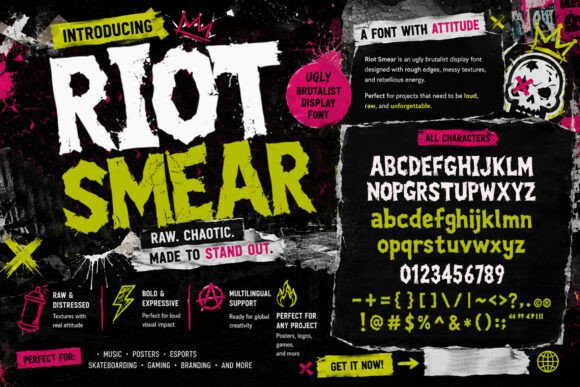
In a digital landscape often dominated by pristine vectors and pixel-perfect geometry, there is a growing hunger for texture, grit, and the unmistakable touch of the human hand. This is exactly where Riot Smear enters the conversation. It isn't just a typeface; it is a visual statement, a piece of raw urban energy captured in letterform. As a bold, ugly brutalist display font, Riot Smear rejects the polish of traditional design in favor of chaotic cuts, rough handmade textures, and a rebellious aesthetic that demands attention. For designers and creators tired of safe, corporate typography, this font offers a necessary jolt of electricity.
Visually, Riot Smear is characterized by its aggressive stance and imperfect edges. The letters appear as though they have been physically distressed—torn, scratched, or inked with a heavy, unsteady hand. This isn't the sterile "grunge" effect you might find in a default software filter; it is a carefully crafted style that embodies the spirit of underground zines and street art. The visual weight of the font is substantial, making it a powerful tool for headlines where the goal is to stop the viewer in their tracks. It carries a personality that is loud, unapologetic, and undeniably cool, fitting perfectly into the modern typography shift toward expressive, emotional type design.
Strategic Applications: Where Brutalism Meets Brand Identity
Understanding where to deploy a typeface like Riot Smear is just as important as the font itself. Because of its high-impact nature, it functions best as a display font rather than a body text solution. It is a premium font asset for projects that require a specific "edge." If you are working on music posters, album covers, or branding for a garage band, the raw energy of this font aligns perfectly with the auditory chaos of the genre. Similarly, in the world of esports and gaming visuals, readability at a glance is important, but so is the "attitude." Riot Smear bridges that gap, offering a look that feels native to gaming culture without sacrificing the distinctiveness required for logo design.
Beyond entertainment, this typeface has significant applications in streetwear, skate culture branding, and indie publishing. For a small business owner launching a clothing line that targets a younger, counter-culture demographic, using a standard sans serif font might make the brand feel generic. In contrast, incorporating Riot Smear into the brand identity can signal authenticity and rebellion. It works exceptionally well for:
- Event Promotion: Flyers for underground events, art shows, or pop-up markets where you need to cut through the noise of social media graphics.
- Editorial Design: Magazine headlines or blog headers that aim to provoke thought or challenge the status quo.
- Packaging Design: Product boxes or labels for craft beverages, hot sauces, or DIY kits where a "handmade" or "hazardous" vibe is part of the appeal.
- Merchandise: T-shirt graphics and posters where the typography itself acts as the primary artwork.
Mastering Visual Hierarchy and Audience Engagement
One of the most critical aspects of using a creative font like Riot Smear is managing visual hierarchy. Because the typeface has such a strong texture and chaotic structure, it naturally dominates any composition it inhabits. This is a massive advantage for designers looking to establish a focal point immediately. When a user lands on a web design homepage or picks up a physical flyer, the eye should be drawn to the most important message first. Riot Smear achieves this effortlessly. However, this dominance means it can easily overpower secondary information.
The key to successful implementation lies in contrast. To maintain professionalism and readability, you should pair Riot Smear with a more subdued typeface for body copy. A clean, geometric sans serif font or a simple serif font often works best here. This pairing allows the "voice" of the headline to be loud and expressive, while the supporting text remains legible and easy to digest. By balancing the raw energy of Riot Smear with a structured secondary font, you create a rhythm in your design that guides the reader naturally from the headline to the details. This approach ensures that your design assets look cohesive rather than chaotic.
Practical Implementation: Licensing, Pairings, and Testing
Before integrating Riot Smear into a commercial project, there are practical considerations to address to ensure a smooth workflow. First and foremost is the matter of commercial licensing. If you are a freelancer, a marketing agency, or a business owner, you must ensure that the license covers your specific use case—whether that is for digital web design, physical merchandise, or software embedding. Respecting the font creator's terms is a hallmark of a professional creative workflow and protects your brand from legal complications down the line.
Evaluating the fit of the font requires more than just typing out your brand name. You should test the typeface across different mediums. How does Riot Smear look rendered on a low-resolution mobile screen versus a high-definition billboard? Does the texture get lost in small sizes? Generally, brutalist display fonts like this are intended for large scales. If you try to use it for small sub-headers or legal text, the intricate details of the "smear" effect may turn into visual noise, hurting readability. Always test your font pairings in context; place the headline in Riot Smear next to your chosen body text to check for aesthetic dissonance.
Finally, consider the longevity of your design. Trends in graphic design come and go, but a strong brand identity relies on consistency. While Riot Smear is perfect for a specific campaign or a brand that fundamentally relies on a counter-culture aesthetic, think about how it fits into your broader design system. Does it have enough versatility to be used across social media graphics, email headers, and print media without feeling repetitive? By treating Riot Smear as a strategic design asset rather than just a decorative element, you can harness its raw power to create memorable, high-impact visuals that truly resonate with your audience.