Machine 1942: Adding Authentic Vintage Character to Your Work
If you spend any amount of time designing for brands that want to feel grounded, historic, or industrial, you quickly learn that not all typefaces are created equal. Modern, clean fonts are excellent for tech startups, but they often fall short when you need to evoke the smell of ink and oil. This is exactly where Machine 1942 steps in. It is a vintage-inspired typeface that doesn’t just look like an old typewriter; it feels like one. It captures the authentic, mechanical resistance of historical documentation, offering a rugged aesthetic that digital perfection cannot replicate.
The Aesthetic of Mechanical Wear
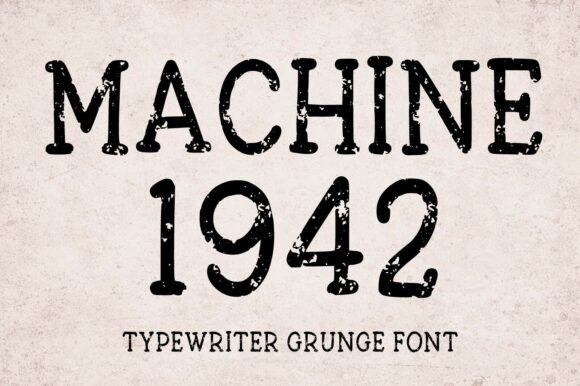
What defines the look of Machine 1942? It isn’t just about being a serif font; it is about the texture. This typeface features distressed details that mimic the wear and tear of a typewriter ribbon that has been used one too many times. You will notice uneven ink distribution and slight imperfections in the letterforms. This creates a visual hierarchy that is organic rather than rigid. It possesses a specific "grunge" quality—not the messy, chaotic grunge of the 90s, but the structured decay of heavy machinery.
The personality of this font is undeniably strong. It feels loud, authoritative, and masculine. When you use Machine 1942, you are making a statement about durability. It suggests that the content it holds has weight and history. It works exceptionally well in uppercase settings where the blocky nature of the letters can create a solid, imposing wall of text, or in lowercase for a more worn, personal journal effect.
Practical Applications: Where This Font Shines
As a designer or business owner, knowing where to deploy a premium font like this is half the battle. Because of its high-contrast texture and distinct personality, Machine 1942 is best used as a display font rather than for body copy. It is a creative asset that demands attention.
Here are some specific scenarios where this typeface excels:
- Logo Design and Branding: For businesses in the coffee, craft beer, barber shop, or outdoor adventure industries, this font creates an instant brand identity. It tells the customer that the brand values tradition and craftsmanship. It pairs beautifully with rough textures like wood grain or concrete.
- Packaging Design: Imagine a label for an artisan hot sauce or a heritage whiskey. Machine 1942 adds the necessary shelf appeal to compete with established brands. It gives the product a sense of provenance, even if the brand is brand new.
- Editorial and Book Covers: Thriller novels, history books, and mystery genres rely heavily on atmosphere. This creative font sets the mood immediately. It looks like a document pulled from a classified file, making it perfect for editorial design that requires a narrative hook.
- Poster Design: Whether it is for a music festival, a vintage market, or a movie prop, the font delivers a retro punch. It works well for headlines that need to be legible from a distance but carry a stylistic flair.
- Digital and Social Media: In the world of social media graphics, stopping the scroll is everything. A textured, gritty headline created with Machine 1942 stands out against the smooth gradients and photos typical of Instagram or Pinterest feeds.
Strategic Typography: Pairing and Hierarchy
Using a font with this much character requires a strategy. If you set your entire website or brochure in Machine 1942, you risk visual fatigue. The texture becomes overwhelming, and readability plummets. The key to professional typography is contrast.
When building your font pairing, look for balance. Because Machine 1942 is a textured serif font, it pairs exceptionally well with clean, geometric sans serif fonts. Think of a font like Montserrat, Helvetica, or Futura for your subheadings and body text. The clean lines of the sans serif will allow the texture of the typewriter font to breathe without competing for attention.
Alternatively, you can pair it with a subtle script font or handwritten font for a more eclectic, scrapbook aesthetic, though this works better for personal projects or craft blogs than for corporate branding. The goal is to create a visual hierarchy where Machine 1942 acts as the "voice" of the headline, and the secondary font acts as the "voice" of the explanation.
Technical Considerations and Licensing
Before you finalize your design, there are a few practical checks you need to perform. First, consider readability. While Machine 1942 is legible for short bursts of text, the distressed nature of the letters can make long sentences difficult to read, especially at small sizes or on low-resolution screens. Always test your designs at the intended output size.
Second, look at the character map. A high-quality commercial font usually includes more than just the basic alphabet. Check if Machine 1942 includes alternate characters, ligatures, or special punctuation. These extras allow you to customize the look of the text so that two instances of the letter "e" don't look identical, increasing the authenticity of the typewriter effect.
Finally, verify the licensing. If you are using this for a client's logo design or a product sold on t-shirts, you need to ensure the license covers commercial use and the specific number of prints or users. Respecting licensing ensures you are using professional design assets correctly and protects your business from legal issues down the road.
In conclusion, Machine 1942 is more than just a font; it is a mood. It bridges the gap between digital creation and analog history. By using it sparingly and pairing it wisely, you can leverage its rugged charm to create designs that feel authentic, professional, and deeply engaging. Whether you are launching a new brand or refreshing a blog, this typeface offers a reliable way to inject character into your visual communication.