Butterfly Font: A Whimsical Touch for Creative Projects
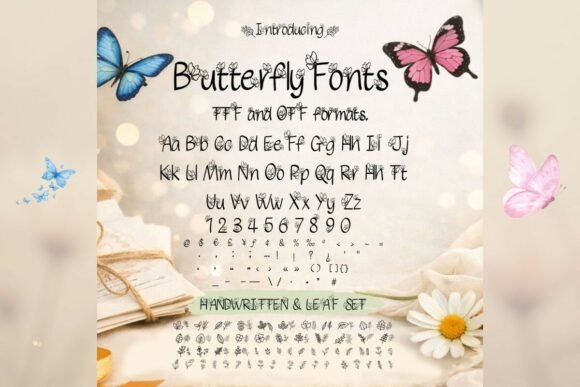
There are moments in design when a project calls for something beyond standard typography. It needs a voice that feels personal, organic, and full of life. This is precisely where the Butterfly font finds its strength. As a premium font, it moves past simple text, offering a handwritten script style that is artfully decorated with delicate butterflies, leaves, and floral motifs. It’s not just a typeface; it’s a design element in its own right, ready to infuse charm and positivity into a wide range of creative work.
The personality of Butterfly is one of gentle elegance and whimsical nature. The letterforms flow with the organic imperfections of a hand-drawn script, giving them an authentic, human touch. This is a creative font that tells a story of springtime gardens and quiet afternoons. Its visual appeal lies in the seamless integration of its decorative elements, which don’t overwhelm the letters but rather accentuate them. The result is a typeface that feels both artistic and approachable, making it a valuable asset for designers, entrepreneurs, and creators who want to connect with their audience on a more emotional level.
Where Butterfly Truly Shines: Practical Applications
Understanding where a font like Butterfly works best is key to using it effectively. Its strength is in applications where personality and visual warmth are paramount. Think of it as a tool for creating a specific mood rather than for setting large blocks of text.
In the realm of logo design and brand identity, Butterfly can be transformative for businesses that want to project a friendly, artisanal, or nature-centric image. A boutique floral shop, a handmade jewelry brand, a wellness coach, or a children’s boutique could use this display font to create an immediate and memorable impression. It helps a brand feel more human and less corporate, which can be a powerful differentiator in a crowded market.
For editorial design and publishing, this script font is perfect for eye-catching chapter titles, magazine pull quotes, or the cover of a poetry collection. It adds a layer of sophistication and artistry that draws the reader in. Similarly, in packaging design, it can elevate a product on the shelf, suggesting care, quality, and a connection to nature—ideal for organic goods, artisanal foods, or natural beauty products.
The digital space is another natural habitat. Social media graphics come alive with Butterfly, especially for quotes, announcements, or promotional posts for lifestyle brands. It’s also an excellent choice for web design, where it can be used for impactful headlines on a homepage or for special landing pages, creating a visual experience that aligns with a brand's story.
Of course, its charm extends deeply into personal and print projects. For anyone creating greeting cards, wedding invitations, planners, or tags, this handwritten font provides a ready-made aesthetic. It turns a simple card into a keepsake and a planner into a source of inspiration. For crafters and hobbyists, it’s a design asset that simplifies the process of creating beautiful, cohesive projects.
Integrating Butterfly into Your Design Workflow
Choosing the right font is a strategic decision. To determine if Butterfly is the right fit, start by evaluating your project’s core message. Does it call for whimsy, nature, warmth, and a personal touch? If the answer is yes, it’s a strong candidate. However, always consider the context. A law firm’s annual report would not be the right home, but a bakery’s menu might be perfect.
A crucial step is testing font pairings. Because Butterfly is a detailed display font, it pairs best with simple, clean typefaces. A classic serif font can add a touch of timeless elegance, while a neutral sans serif font provides modern contrast and ensures readability for body text. For example, you might use Butterfly for a heading and pair it with a font like Lato or Playfair Display for subheadings and paragraphs. This creates a clear visual hierarchy and keeps the design from feeling cluttered.
Readability is always a consideration. As a script font, Butterfly is best reserved for short phrases, titles, and display purposes. Using it for lengthy sentences or small text sizes can hinder legibility. Its role is to captivate at a glance, not to be read in long passages.
Before finalizing your choice, review the full character set. A quality premium font like this often includes alternate characters, ligatures, and stylistic sets. These extras allow you to customize the look, avoid repetitive letter shapes, and achieve a more authentic handwritten feel. Taking the time to explore these options can significantly enhance your final design.
Finally, for any professional or commercial use, always confirm the commercial font license. Ensuring you have the correct rights for your project—whether it’s a client’s logo, a product for sale, or a digital download—is a fundamental part of professional practice. It protects your work and respects the creator’s effort.
In the end, Butterfly is more than just another creative font. It’s a versatile design tool that, when used thoughtfully, can bring projects to life. It helps build a brand identity that feels genuine, creates marketing materials that engage, and turns personal creations into something special. By focusing on its strengths and applying it with intention, you can harness its whimsical, nature-inspired style to create work that truly resonates.